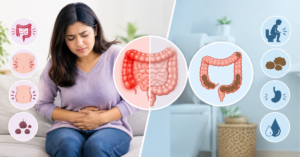
IBS-C stands for irritable bowel syndrome with constipation. It is a type of irritable bowel syndrome (IBS) in which constipation occurs alongside recurring abdominal pain and changes in bowel habits.
Common IBS-C symptoms include hard stools, straining during bowel movements, bloating, abdominal discomfort, and a feeling that the bowel has not emptied completely. These symptoms may come and go and can affect everyday comfort.
How Is IBS-C Different From Ordinary Constipation?
Although both conditions can cause difficulty passing stools, there are important differences.
- Abdominal pain: IBS-C commonly involves recurrent abdominal pain associated with bowel movements or changes in stool frequency or appearance. Ordinary constipation may occur without recurrent abdominal pain.
- Bowel movements: Both conditions can cause hard stools, straining, and fewer bowel movements than usual.
- Bloating: Bloating and abdominal discomfort are common in IBS-C but can also occur with ordinary constipation.
- Symptom patterns: Occasional constipation may be temporary, while IBS-C typically involves recurring symptoms over time.
- Diagnosis: A healthcare professional evaluates the overall symptom pattern to distinguish IBS-C from other digestive problems.
Constipation, bloating, or abdominal pain alone does not confirm IBS-C.
What Can Cause Or Worsen IBS-C Symptoms?
IBS-C does not have one single cause. Changes in bowel movement patterns, gut sensitivity, and communication between the brain and digestive system may contribute. Stress, certain dietary patterns, and individual food sensitivities can also worsen symptoms in some people.
Triggers vary between individuals. A food that causes discomfort for one person may be well tolerated by another. Keeping track of meals, symptoms, and bowel habits can help identify possible patterns without unnecessarily restricting your diet.
How Can IBS-C Symptoms Be Managed?
Several everyday habits may help manage constipation and digestive discomfort:
- Eat regular meals and drink adequate fluids.
- Increase fibre gradually when appropriate. Sudden increases may worsen bloating, while certain types of fibre may help constipation.
- Stay physically active and maintain a regular toilet routine.
- Track symptoms to identify possible dietary or lifestyle triggers.
- Seek medical advice before starting laxatives, fibre supplements, or other treatments if symptoms persist.
Treatment should be individualised according to symptoms, medical history, and response to different approaches.
When Should You Consult A Gastroenterologist?
Consult a gastroenterologist if constipation persists, abdominal pain repeatedly occurs, or digestive symptoms interfere with daily activities. Blood in the stool, unexplained weight loss, anaemia, or a new, persistent change in bowel habits also needs medical assessment. Severe abdominal pain with vomiting or an inability to pass stool or gas requires urgent evaluation. If you need IBS Treatment in Indore, a qualified gastroenterologist can assess your symptoms and recommend appropriate management.
FAQs
1. Can IBS-C cause abdominal pain as well as constipation?
Yes. Recurrent abdominal pain is a key feature of IBS and commonly occurs alongside constipation in IBS-C.
2. Can ordinary constipation cause bloating?
Yes. Constipation can cause bloating and discomfort, but these symptoms alone do not establish IBS-C.
3. How is IBS-C diagnosed?
Diagnosis involves reviewing symptoms, medical history, and clinical findings. Additional tests may be recommended when needed to investigate other possible causes.
4. Can stress make IBS-C symptoms worse?
Yes. Stress may worsen symptoms through interactions between the brain and gut, but it is not the only contributing factor.
5. When should I seek medical advice for persistent constipation?
Seek medical advice if constipation continues, abdominal pain recurs, or symptoms affect daily life. Blood in the stool, unexplained weight loss, or severe pain requires prompt assessment.